Monday, July 23, 2018

Robot themed restaurant opened in Coimbatore

Robot themed restaurant opened in Coimbatore


COIMBATORE: A concept seen in “Avengers” and other super hero movies and maybe in restaurants abroad has now come to Coimbatore. A group of five youngsters, who are passionate about theme-based restaurants, have opened a robot themed restaurant in the city.


Robots pick up the food from the kitchen and deliver it at the customer’s table. Customers can pick up the food from the tray.

The robot will also be able to detect someone blocking its way and request them to move out of their way.

“When one of our partners, Venkatesh, travelled abroad, robots served him at some restaurants in China and even Africa,” said Karthikeyan, one of the five partners of the restaurant. “He decided to bring the concept to India,” he said.


The youths, who were already running an aeroplane themed Chinese restaurant, began working on sourcing robots that could serve in restaurants and figuring out how to program and repair them.

“We finally sourced them from a company abroad. Venkatesh then went to the company and spent some time learning to program them, operate them and even repair them,” said Karthikeyan.

“We started our first restaurant on the Old Mahabalipuram Road in Chennaiaround eight months ago and named it Robot Themed Restaurant. It was a success, and many of our customers who visited the restaurant wanted us to come to Coimbatore. So we began working on it,” he said.

The Coimbatore restaurant, which serves Chinese, Thai and Indian food, has eight robots. Customers can place their order on an iPad. The food prepared by chefs is then transferred to the tray held by robots and they are programmed to serve it at the specific table. However, servers are employed to serve the food from the robot’s tray to the customer’s plate.


“We decided to employ servers so that they can explain the names of the dishes to the customers because we have many varieties of breads, fried rice and gravies,” said Karthikeyan.


“Currently we have not been able to reduce staff strength because we have two people to operate the robots alone,” he said.


The robots cost around Rs 7 lakh each

Singapore says hackers stole 1.5 million health records in cyberattack

Singapore says hackers stole 1.5 million health records in cyberattack


Hackers have stolen the health records of 1.5 million Singaporeans including Prime Minister Lee Hsien Loong, authorities said Friday, with the leader specifically targeted in the city-state's biggest ever data breach.


Singapore's health and information ministries said a government database was broken into in a "deliberate, targeted and well-planned" strike, describing the attack as "unprecedented".

"Attackers specifically and repeatedly targeted the personal particulars and outpatient information of Prime Minister Lee Hsien Loong," health minister Gan Kim Yong told a press conference.

Forensic analysis by Singapore's Cyber Security Agency "indicates this is a deliberate, targeted, and well-planned cyberattack and not the work of casual hackers or criminal gangs," he added.

Officials declined to comment on the identity of the hackers, citing "operational security", but said the prime minister's data has not shown up anywhere on the internet.

"I don't know what the attackers were hoping to find. Perhaps they were hunting for some dark state secret, or at least something to embarrass me," Lee wrote on Facebook.

"My medication data is not something I would ordinarily tell people about, but there is nothing alarming in it."

Hackers used a computer infected with malware to gain access to the database between June 27 and July 4 before administrators spotted "unusual activity", authorities said.

The compromised data includes personal information and medication dispensed to patients, but medical records and clinical notes have not been affected, the health and communications ministries said.

Data for sale
"Health records contain information that is valuable to governments," said Eric Hoh, Asia-Pacific president of cyber-security firm FireEye.

"Nation states increasingly collect intelligence through cyber-espionage operations which exploit the very technology we rely upon in our daily lives."

Earlier this month, the US National Intelligence Director Dan Coats described Russia, China, Iran and North Korea as the "worst offenders" when it came to attacks on American "digital infrastructure".

Some hackers have in the past offered stolen data and software for sale online.

Wealthy Singapore is hyper-connected and on a drive to digitise government records and essential services, including medical records which public hospitals and clinics can share via a centralised database.

But authorities have put the brakes on these plans while they investigate the cyberattack. A former judge will head a committee looking into the incident.

While the city-state has some of the most advanced military weaponry in the region, the government says it fends off thousands of cyberattacks every day and has long warned of breaches by actors as varied as high-school students in their basements to nation states.

In his Facebook post about the attack, Lee warned that "those trying to break into our data systems are extremely skilled and determined. They have huge resources, and never give up trying."


Following the announcement, Singapore's cyber security agency has also put out two advisories advising web administrators and members of the public to protect personal data. This included complex instructions to secure website domains and just simply watching out for suspicious information requests.


A new Cybersecurity Act passed earlier this year requires those providing essential services -- including government, healthcare and security -- to secure their web infrastructure and report any major incidents.


In 2017, hackers broke into a defence ministry database, stealing the information of some 850 army conscripts and ministry staff.

Facebook wants to launch own internet satellite in 2019: Report

Facebook wants to launch own internet satellite in 2019: Report


As part of its plan to connect billions of people who are still offline, Facebook is working on launching Athena, its own Internet satellite, early in 2019, the WIRED reported.


According to an application Facebook appears to have filed with the US Federal Communications Commission(FCC) under the name PointView Tech LLC, the project is designed to "efficiently provide broadband access to unserved and underserved areas throughout the world," the report said on Friday.

Facebook, however, is not alone in aiming to increase Internet accessibility through satellites in low Earth orbit. Elon Musk's SpaceX and Softbank-backed OneWeb are two other prominent names who have similar ambitions.

Facebook also confirmed that Athena is their project, according to the report in the WIRED.

"While we have nothing to share about specific projects at this time, we believe satellite technology will be an important enabler of the next generation of broadband infrastructure, making it possible to bring broadband connectivity to rural regions where Internet connectivity is lacking or non-existent," a Facebook spokesperson was quoted as saying in a statement.

While Facebook had long expressed its cherished goal of connecting billions of underserved people around the world, it has not had much success with two earlier projects.

In June, Facebook announced it decided to abandon its plan to develop high-flying solar-powered drones called Aquila that was aimed to deliver Internet to nearly four billion people in remote parts of the world.


A high altitude platform station (HAPS) system, Aquila's mission, according to Facebook CEO Mark Zuckerberg, was to connect the world and help people who do not have online access all the opportunities of the Internet.


Facebook began Aquila project in 2014. In 2017, the solar-powered drone successfully completed the second full-scale test flight.


The social network also discontinued in 2017 a small helicopter drone project that could temporarily replace cellular services in emergency situations, The Verge reported.


The idea was to send a helicopter equipped with telecommunications equipment hundreds of metres up in the air to be able to tether to fibre and power lines in places where wireless capacity was compromised due to disaster or other factors.

Students, get discounts up to Rs 20,000 on laptops on PaytmMall

Students, get discounts up to Rs 20,000 on laptops on PaytmMall


Paytm Mall is offering discounts and cashbacks on laptopsfor students under its ‘Student Lap-shop’ campaign. The e-commerce wing of Paytm has been running the campaign for about a month now. As part of the sale, student buyers can avail upto Rs 20,000 cashback on purchase of laptops from brands like Apple MacBook, Asus, Lenovo and HP.

Additionally, laptops are available at no-cost EMI during the sale with purchase on select bank credit cards. Shopping vouchers are also given across brands including Red Tape, Allen Solly, Amazon Echo, MS Office. Buyers will be given two free movie tickets and vouchers with flat 20% cashback on printers during the sale. Offers given during the campaign are valid till August 31 and can be redeemed on Paytm.

As part of the campaign, laptops have been categorised under various heads -- Laptops for engineers and coders, Laptops for law and art students, Laptops for architects and designers and Laptop for business and management studies.

Laptops under the engineers and coders category start from Rs 38,385. Under this segment, Apple MacBook Pro MD101HN/A (Intel Core i5 (3rd Gen) is available with maximum cashback of Rs 8,890 at a discounted price of Rs 88,900. HP 15-bs145TU (Core i5 (8th Gen), though originally price at Rs 43,265 is being offered at Rs 40,990. The one with maximum discount is Lenovo Ideapad 320E-15IKB 80XL0377IN(Intel Core i5 (7th Gen). The laptop is given a 23% discount on its original price of Rs 57,590 and is available at Rs 44,380.


Acer Aspire 3 A315-51-356P, Lenovo Ideapad 320 and Dell Vostro 3568 priced at Rs 24,990, 26,790 and 27,485 respectively are some of the laptops available under the arts category. Maximum cashback of Rs 6,500 is offered on HP Pavilion x360 Convertible 14-ba075TX Core i3 (7th Gen). The laptop can be purchased at Rs 50,990 during the sale.


HP Pavilion x360 Convertible, Apple MacBook Air MQD42HN/A and Acer Aspire A515-51G Ultrabook are priced at Rs 72,973, Rs 80,990 and Rs 51,990 respectively under the laptop for architects and designer category.


Laptops for business and management students start from Rs 23,990. Acer Aspire E 15 (NX.GRSSI.001) Core i3 (6th Gen) is available at Rs 25,899 after a 19% discount on its original price of Rs 31,999. Asus Vivobook X507UA-EJ180T (Intel Core i3 (6th Gen), Dell Inspiron 3567 Core i3 (6th Gen) and HP 15-bs542TU (Intel Core i3 (6th Gen) are other laptops available at Rs 28,990, Rs 28,268 and Rs 27,440 respectively.

Schools opt facial recognition technology to boost security

Schools opt facial recognition technology to boost security


An upstate New York school district is giving its surveillance system a novel upgrade: Facial recognition technology soon will check each face against a database of expelled students, sex offenders and other possible trouble makers.


It could be the start of a trend as more schools wary of shootings consider the technology. Just last week, a Seattle company began offering a free version of its facial recognition system to schools.


Already, the Lockport district's plan has opened a debate in the community. But the discussion about facial recognition goes far beyond. Microsoft President Brad Smith in a recent blog called for government regulation.


The New York Civil Liberties Union wants to keep the technology out of schools in Lockport and throughout New York, calling it invasive and inaccurate.

Google Glass may come to the aid of autistic people

Google Glass may come to the aid of autistic people


Google Glass -- an eye-wearable device that made headlines in 2015 but failed in the consumer technology space -- has now rekindled the hopes of millions of people with autism spectrum disorder (ASD) globally, including in India. Although no official numbers are available, at least 70 million people have autism worldwide, including over 10 million in India.

According to Dr Ned Sahin, Founder and CEO of Brain Power, a US-based science-driven company, Augmented Reality (AR)-powered wearable computers can help those with ASD gain confidence, clarity, understanding, social integration and self-sufficiency.

There is no cure for autism but early diagnosis and intervention with therapies does improve the long-term outcome.

"We need help. We need families and schools to support the first wave of technology for autism and special school communities.

"I am open to collaboration if there is an interest from schools, organisations and families from India. We can customise our Google Glass-based applications for autistic people in India," Dr Sahin told IANS.

Brain Power is currently working with several schools in the US. The "Empower Me" wearable system has been used by hundreds of children and adults on the autism spectrum.

In this technology, the child or adult wears light, computerised Glasses and sees and hears special feedback geared to the situation -- like digital coaching on facial expressions of emotions, when to look at people, feedback on the user's own state of stress or anxiety.

"The apps also encourage them to make eye contact and control repetitive behaviours -- both of which are big challenges related to autism," said Dr Sahin, a famed neuroscientist who studied at Harvard and MIT.

According to Dr Sahin, contrary to what most of the people think, kids actually treat wearable devices as fun and are facing no problem using them.

"We have discovered scientifically that people with autism enjoy using wearable devices and embedded software for socio-emotional learning," Dr Sahin told IANS.

Each software module connects to Brain Power's Cloud-hosted portal where Artificial Intelligence (AI) algorithms produce insights and predictions in real time.

The game-like apps collect numerical behavioural data -- scientifically and rigorously -- and present the child, family, school or clinic with insights and answers they can readily understand.

At AWS Public Sector Summit in Washington DC last month, Dr Sahin announced a couple of new products.

"We now have a package for schools consisting multiple AR devices. The devices and the software add more functionalities than we had before. It generates very good data about how kids are learning, their progress and whether young adults have the right skill-sets to get a job," Dr Sahin explained.

Another new product is called "Learning Eye".

In this technology, a camera is placed in the classroom which is connected to a computer that runs Machine Learning (ML) algorithms.

"AWS gave us access to its new product called Deeplens months before releasing it to the public. 'Learning Eye' uses Deeplens' capabilities to run ML in the classroom in order to assist teachers as well as kids," noted Dr Sahin.

The technology can detect if a student is paying attention or not. It can also detect if a student is writing a message on his smartphone in the classroom, giving a warning to the student while alerting the teacher.

"The teacher can also assess when the student is bored and initiate an immediate feedback to improve the student's mood. She can get entire data about what is happening in the classroom," Dr Sahin informed.

AWS Deeplens helps the Brain Power team run deep learning models locally on the camera to analyse and take action on what it sees.

DeepLens is easy to customise and is programmable using AWS Lambda -- a serverless compute service that makes it easy to build applications that respond quickly to new information.

"We are very serious about maintaining privacy. Video footage stays in the classroom and is never sent to Cloud. Video processing is done at the edge of the Cloud to maintain complete privacy," Dr Sahin told IANS.

The company has also developed a method known as "Fidgetology" which rapidly quantifies body language to assess mental health or to estimate enjoyment of ads or other media.


"Fidgetology" was developed in collaboration with AWS, using the company's Cloud-based AI, ML and computer visions tools.


Dr Sahin is positive that Indian schools and organisations working in the field of autism will come forward to a life-changing experience.


"We would like to expand our capabilities to India. It all depends on the desire of the people to have the new technology and empower children and adults all along the autism spectrum to teach them practical life skills," the neurotechnology entrepreneur hoped.

Saturday, July 21, 2018

6 in every 10 smartphones sold in India are from Xiaomi or Samsung

6 in every 10 smartphones sold in India are from Xiaomi or Samsung


NEW DELHI: Earlier this week, it was reported that the Cupertino-based tech giant Apple is struggling to gain a strong market share in the Indian market and another report revealed that HTC is exiting from the smartphone business in India. We can perhaps say that both these reports are the result of the growing popularity of Xiaomi and Samsung


As per a report by research firm Canalys, for the second quarter both Xiaomi and Samsung shipped 9.9 million smartphones in the country during the last three months. As reported this is the first time for both the companies to ship these many handsets within a single quarter.


Despite that the Chinese smartphone maker Xiaomi managed to retain its top position in the Indian market by beating Samsung. As per the research firm Canalys, both the companies had 30% market share in the quarter. But Xiaomi shipments increased by 106% year-on-year, while Samsung witnessed the rise of 47% as compared to the last quarter. During that time the most popular Xiaomi phone was the Redmi 5A with 3.3 million units sold, whereas the Galaxy J2 Pro from Samsung was its best seller with 2.3 million units.


Canalys Analyst TuanAnh said, "Samsung is hitting back. It has launched devices pitted directly against Xiaomi's portfolio and is focusing on its cameras and imaging capabilities with Portrait Dilly and Background Blur Shape functions. Based on Canalys' smartphone sell-in estimates, the J2 Pro was Samsung's top model in Q2 2018 with 2.3 million units shipped in India. In comparison, Xiaomi shipped 3.3 million of its Redmi 5A. Despite Xiaomi's growing popularity in India, Samsung will remain the first choice for consumers. Its technological prowess and supply chain mastery will continue to give it an edge over Xiaomi for the foreseeable future."


The third position in the list is captured by Vivo with 3.6 million units shipped and 11% market share. The fourth position is captured by Oppo with 10% market share. Overall, 32.6 million smartphones were delivered in the span of three months, which is 22% year-over-year gain.

iPhones face shutdown without pesky call app

iPhones face shutdown without pesky call app


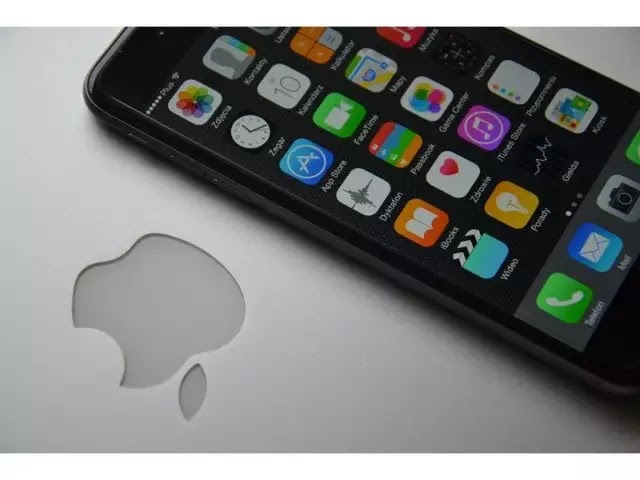
NEW DELHI: Mobile operators will be forced to shut down Apple iPhoneson their networks if the American giant fails to install a pesky call app on its phones within the next six months.

The company has steadfastly refused to install any such app so far, despite telecom regulator Trai’s displeasure over its refusal.

Things may change now with Trai on Thursday coming out with a new regulation that asks companies to provide an app which allows subscribers to report pesky calls and messages. However, parties concerned must be given a “reasonable opportunity of representing against the contravention of regulations.”

Apple’s in-house app offer needs approval of Trai

Trai’s order on a mandatory pesky call app needs to be adhered to within six months, failing which there could be serious repercussions.

“Every access provider shall ensure, within six months’ time, that all smart-phone devices registered on its network support the permissions required for functioning of such apps,” a clause tucked away in Trai’s voluminous 113-page ‘Telecom Commercial Communication Customer Preference Regulation’ says.

It further adds, “Provided that where such devices do not permit functioning of such apps as prescribed in regulations… access providers (mobile operators) shall, on the order or direction of the (telecom) authority, de-recognize such devices from their telecom networks.” Issue of pesky call app has been a thorny one with Apple not agreeing to install it despite Google’s Android agreeing to carry Trai’s do-not-disturb (DND) app on its devices.

Trai chairman R S Sharmaaccused Apple of engaging in “data colonisation” in August last year .

Things are yet to get sorted even now, though there have been several discussions between Apple and Trai officials.


TOI has learnt that Apple has now filed a fresh proposal with the regulator last month, offering an in-house solution, but this has so far failed to find acceptance within Trai. The phone major is saying that privacy of its customers is of utmost importance, and “cannot be compromised” at any cost.


Trai’s new regulation now says that such an app either needs to be the one provided by Trai “or by any other person or entity and approved by the (telecom) authority.” The move, sources say, will force Apple to either agree to carry the app provided by Trai, or else have an in-house app which needs to find approval of Trai.


The regulator claims that its DND app — launched in June 2016 — has ways to tackle the issue of unwanted calls and messages. While Android phones approve the app, Apple had initially objected to it, saying that it was not in a position to share a customer’s phone records and message details due to strict privacy stipulations.

Top Photo Editor Apps in Google Playstore

Below Download Link : https://play.google.com/store/apps/details?id=com.vishcoder.photoeditor Feature: photo editor : * A powerful ...